
Dear WRF community,
I am running WRF version 4.3.3 and have encountered a puzzling behavior with the roughness length ZNT over urban areas.
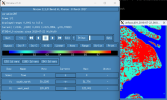
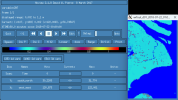
In the wrfout files at the initial time, the ZNT distribution looks reasonable: urban areas show a maximum of about 0.8 m, which seems to correspond to the SFZ0 value of 80 in LANDUSE.TBL. However, at the very next output time, urban ZNT suddenly drops to around 0.1 m. This drastic change does not look physically realistic, and I’m trying to understand why it is happening.
I found a previous forum post titled Why roughness(ZNT) of Urban is lower than Croplands in UCM? that describes the same issue, but unfortunately no solution was provided there and the thread is already closed. I also checked the known issues for WRF 4.0, where a similar problem was listed, but that fix has reportedly been incorporated into WRF 4.1.
Meanwhile, I also find that both ZNT_mosaic and Z0_mosaic are zero in my output. Why would that be?
Additionally, I noticed that there are two roughness length variables in Registry.EM_COMMON: ZNT (time_varying roughness length) and Z0 (background roughness length). Could someone explain the difference between these two, and which one is actually used in the model?
Note: Because I need to use WRF-WVT, I am working with WRF 4.3.3. I have also modified the LCZ values from 31–41 to 51–61 in LANDUSE.TBL, MPTABLE.TBL, URBPARM.TBL, and VEGPARM.TBL in order to avoid the “LANDUSE OUTSIDE RANGE” error. I’m not sure whether these table modifications could be related to the sudden ZNT drop.
Thank you very much for your time and help!
Best regards,
zhanyx
I am running WRF version 4.3.3 and have encountered a puzzling behavior with the roughness length ZNT over urban areas.
In the wrfout files at the initial time, the ZNT distribution looks reasonable: urban areas show a maximum of about 0.8 m, which seems to correspond to the SFZ0 value of 80 in LANDUSE.TBL. However, at the very next output time, urban ZNT suddenly drops to around 0.1 m. This drastic change does not look physically realistic, and I’m trying to understand why it is happening.
I found a previous forum post titled Why roughness(ZNT) of Urban is lower than Croplands in UCM? that describes the same issue, but unfortunately no solution was provided there and the thread is already closed. I also checked the known issues for WRF 4.0, where a similar problem was listed, but that fix has reportedly been incorporated into WRF 4.1.
Meanwhile, I also find that both ZNT_mosaic and Z0_mosaic are zero in my output. Why would that be?
Additionally, I noticed that there are two roughness length variables in Registry.EM_COMMON: ZNT (time_varying roughness length) and Z0 (background roughness length). Could someone explain the difference between these two, and which one is actually used in the model?
Note: Because I need to use WRF-WVT, I am working with WRF 4.3.3. I have also modified the LCZ values from 31–41 to 51–61 in LANDUSE.TBL, MPTABLE.TBL, URBPARM.TBL, and VEGPARM.TBL in order to avoid the “LANDUSE OUTSIDE RANGE” error. I’m not sure whether these table modifications could be related to the sudden ZNT drop.
Thank you very much for your time and help!
Best regards,
zhanyx