
Compiling WRF-4.5.2 with Intel OneAPI on Derecho

jaredlee

New member
I'm trying to compile WRF-4.5.2 on Derecho using the Intel OneAPI compilers. (I've already gotten it to compile fine using the intel-classic/2023.2.1 compilers, but I'm wondering why OneAPI isn't working.) I'm getting very similar compilation failures whether I use intel-oneapi/2023.2.1 or intel-oneapi/2024.0.2, so for simplicity I'll only focus on the first one. As the errors I'm getting are identical, my hope is that the same fix could be applied with either intel-oneapi module that's currently available on Derecho.

Here's my module environment:

Code:
jaredlee@derecho7:~/programs/WRF-4.5.2-oneapi-2023.2.1> module list

Currently Loaded Modules:
  1) ncarenv/23.09 (S)   5) cdo/2.3.0               9) cray-mpich/8.1.27    13) proj/8.2.1
  2) craype/2.7.23       6) conda/latest           10) ncarcompilers/1.0.0  14) geos/3.9.1
  3) nco/5.1.9           7) madis/4.5              11) mkl/2023.2.0         15) hdf5/1.12.2
  4) ncview/2.1.9        8) intel-oneapi/2023.2.1  12) eccodes/2.25.0       16) netcdf/4.9.2

When I ran configure, I selected option 78 (dmpar) for "INTEL (ifx/icx) : oneAPI LLVM". And here's a snippet from the first error in the compilation log (I've attached the full file, along with my configure.wrf):

Code:
time mpif90 -f90=ifx -c -real-size `expr 8 \* 4` -i4  -O0 -fno-inline -no-ip -ip -fp-model precise -w -ftz -align all -fno-alias -FR -convert big_endian   -I../dyn_em  -I/glade/u/home/jaredlee/programs/WRF-4.5.2-oneapi-2023.2.1/external/esmf_time_f90  -I/glade/u/home/jaredlee/programs/WRF-4.5.2-oneapi-2023.2.1/main -I/glade/u/home/jaredlee/programs/WRF-4.5.2-oneapi-2023.2.1/external/io_netcdf -I/glade/u/home/jaredlee/programs/WRF-4.5.2-oneapi-2023.2.1/external/io_int -I/glade/u/home/jaredlee/programs/WRF-4.5.2-oneapi-2023.2.1/frame -I/glade/u/home/jaredlee/programs/WRF-4.5.2-oneapi-2023.2.1/share -I/glade/u/home/jaredlee/programs/WRF-4.5.2-oneapi-2023.2.1/phys -I/glade/u/home/jaredlee/programs/WRF-4.5.2-oneapi-2023.2.1/wrftladj -I/glade/u/home/jaredlee/programs/WRF-4.5.2-oneapi-2023.2.1/chem -I/glade/u/home/jaredlee/programs/WRF-4.5.2-oneapi-2023.2.1/inc -I/glade/u/apps/derecho/23.09/spack/opt/spack/netcdf/4.9.2/oneapi/2023.2.1/yzvj/include   module_alloc_space_1.f90
ifx: error #10106: Fatal error in /glade/u/apps/common/23.08/spack/opt/spack/intel-oneapi-compilers/2023.2.1/compiler/2023.2.1/linux/bin-llvm/xfortcom, terminated by kill signal
compilation aborted for module_alloc_space_1.f90 (code 1)

real    0m5.734s
user    0m4.081s
sys 0m1.608s
make[2]: [../configure.wrf:546: module_alloc_space_1.o] Error 1 (ignored)

The compilation fails with identical ifx "terminated by kill signal" errors for module_alloc_space_1.f90, module_alloc_space_0.f90, module_alloc_space_6.f90, module_alloc_space_7.f90, module_domain.f90, and module_dm.f90, which then cause other downstream compilation errors.

Does anyone have ideas for how to get WRF to compile using OneAPI compilers on Derecho? I had hoped it would work, since there was a PR to allow OneAPI compilers to work in 4.5.2 (add compilation stanza for Intel oneAPI for 4.5.2 (#1946) · wrf-model/WRF@45215e0), but I assume there's probably something I'm doing wrong.

Jared
 

Attachments

Hi Jared,

I just ran a test compile of V4.5.2 using OneAPI on Derecho and mine compiled successfully. Our configure logs are identical, so it must be our environment differences that is causing the problem. These are my settings:

Code:
Currently Loaded Modules:
  1) ncarenv/23.09 (S)   3) intel/2023.2.1        5) cray-mpich/8.1.27   7) netcdf/4.9.2   9) ncl/6.6.2
  2) craype/2.7.23       4) ncarcompilers/1.0.0   6) hdf5/1.12.2         8) ncview/2.1.9

If you want to take a look in the directory where I compiled it, you can find it in /glade/derecho/scratch/kkeene/jaredlee/WRFV4.5.2

You're also welcome to copy over that compiled version, if it would be helpful. If you are still having trouble, I'd recommend reaching out to the CISL support group to see if they can figure out what about your environment is causing the issue.
 
Hi Karl,

Thanks. Upon switching from intel-oneapi/2023.2.1 to intel/2023.2.1, but still using compile option 78 (dmpar, oneapi, icx/ifx), I was able to get WRF to compile. I was also able to get it to compile after switching from intel-oneapi/2024.0.2 to intel/2024.0.2. I have no idea why the intel-oneapi modules are somehow preventing WRF from compiling on Derecho (even though the regular intel modules use oneapi compilers), but I'll let someone else go down that rabbit hole if they want to. What I have now is sufficient for my purposes, and hopefully this thread saves others a little bit of headache in the future.

Jared
 
Posting for posterity:
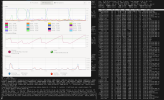
The new ifx compiler takes a TON of memory when compiling some of the larger files (module_alloc_space*, module_dm, module_domain, etc) and this error explicitly comes back with an internal compiler error "#10106 ... xfortcom, terminated by kill signal". This is the system killing the program for taking too much memory.

Attached is an example of this happening just before my computer kicked the bucket for said lack of memory:
Screenshot from 2024-03-20 11-06-54.png

If possible, the interim solution should be to recommend increasing available memory (RAM or swap) if the user is able to. Second to that, on systems like Derecho, one can compile on a compute node for more access to memory vs the login nodes. Compiling on the login nodes is possible but sporadic and highly dependent on memory available at that moment.
 
Thanks, Anthony! That explanation is helpful. Hopefully intel can corral this memory-hogging issue to make it more manageable with future compiler versions...

Jared
 
Closing the loop on this, as running into these same errors while compiling WRF-4.8.0 on Derecho with CMake naturally led my Google searching to this very thread. When compiling on the head node I ran into an xfortcom out of memory error, but when compiling on a compute node everything worked. Also, for completeness, here are the modules/paths I had in my environment on Derecho, in case it's helpful for anyone):

module --force purge
module load ncarenv/24.12
module load intel
module load craype
module load ncarcompilers
module load libfabric
module load cray-mpich
module load hdf5
module load netcdf
module load cmake
export CMAKE_LIBRARY_PATH=/glade/u/apps/derecho/24.12/spack/opt/spack/curl/8.10.1/gcc/12.4.0/vkst/lib
export CMAKE_INCLUDE_PATH=/glade/u/apps/derecho/24.12/spack/opt/spack/curl/8.10.1/gcc/12.4.0/vkst/include

Then run these commands to build with CMake:

./configure_new
./compile_new >& compile.log.cmake.intel

A successful compilation will result in executables for ndown, real, tc, and wrf in the directory _build/main. (I haven't found a good, comprehensive set of instructions for compiling WRF with CMake, so hopefully this additional info is also helpful for anyone else getting stuck trying that.)

I haven't yet tried compiling WRF-4.8.0 with ncarenv/25.06, but hopefully that would work, too.

Jared
 
Posting for posterity:
The new ifx compiler takes a TON of memory when compiling some of the larger files (module_alloc_space*, module_dm, module_domain, etc) and this error explicitly comes back with an internal compiler error "#10106 ... xfortcom, terminated by kill signal". This is the system killing the program for taking too much memory.

Attached is an example of this happening just before my computer kicked the bucket for said lack of memory:
View attachment 13979

If possible, the interim solution should be to recommend increasing available memory (RAM or swap) if the user is able to. Second to that, on systems like Derecho, one can compile on a compute node for more access to memory vs the login nodes. Compiling on the login nodes is possible but sporadic and highly dependent on memory available at that moment.
Yeah Intel OneAPI is a ram beast, I've talked to a few developers at intel and they say it isn't in the plans to address this. So I guess the best thing is to maybe limit some of the modules to serial compiling when dmpar is selected.

I agree with the SWAP ram option too, while swap ram is slower for compiling I have used it. I have 64GB of physical ram and 64GB of SWAP RAM (hard drive ram) and even then I come close to maxing out the memory. when trying to compile using DMPAR. The same problem also occurs with AMD AOCC compilers, if RAM is an issue, GNU so far is the best candidate. You lose about 10-15% performance by using GNU over Intel OneAPI but if you build WRF with PNETCDF enabled, I have been able to get GNU to be about 5-8% performance degradation when compared to intel oneapi without pnetcdf.
 
Yeah Intel OneAPI is a ram beast, I've talked to a few developers at intel and they say it isn't in the plans to address this. So I guess the best thing is to maybe limit some of the modules to serial compiling when dmpar is selected.

I agree with the SWAP ram option too, while swap ram is slower for compiling I have used it. I have 64GB of physical ram and 64GB of SWAP RAM (hard drive ram) and even then I come close to maxing out the memory. when trying to compile using DMPAR. The same problem also occurs with AMD AOCC compilers, if RAM is an issue, GNU so far is the best candidate. You lose about 10-15% performance by using GNU over Intel OneAPI but if you build WRF with PNETCDF enabled, I have been able to get GNU to be about 5-8% performance degradation when compared to intel oneapi without pnetcdf.
@islas is there anyway to add a flag for dmpar option or serial option for intel compilers to limit the number of processes to 1 for certain modules?
 
Back
Top