I am testing WRFV4.1 with sf_ocean_physics=2 and enabling preset moving nest. The program crashes without any errors in rsl.error files. When I disable 3d-ocean and set sf_ocean_physics=0, the model runs fine, indicating that the issue may be related to 3dPWP. Additionally, when I deactivate the 3d-ocean options, the model runs at a quite slower speed than fixed nesting run, leading me to question if my namelist is correct. I would appreciate it if someone helps me.

You are using an out of date browser. It may not display this or other websites correctly.
You should upgrade or use an alternative browser.
You should upgrade or use an alternative browser.
Problems with WRFV4.1 when activate 3dPWP and moving nest
Thank you for your response. I have stopped testing with a moving nest and switched to using a fixed domain. I am unsure if it is appropriate to ask another question here. I am utilizing WRFDA to create ensemble members, selecting the RANDOM CV option3 for generating random perturbations on ICs. For BCs, the module pert_wrf_bc from DART is used to adjust ICs. However, when running WRF with these perturbed ICs and BCs, large gradients appear at the boundary of the domain (currently only using 1 domain). I think it may originate from unbalanced perturbations. I would appreciate it if you can help me out.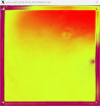
Unfortunately I'm not experienced with WRFDA. Please post your question to the WRFDA section of the forum. At this time, there is no longer any official support for WRFDA, but the hope is that members of the community will assist in helping out with questions they are able to address.Thank you for your response. I have stopped testing with a moving nest and switched to using a fixed domain. I am unsure if it is appropriate to ask another question here. I am utilizing WRFDA to create ensemble members, selecting the RANDOM CV option3 for generating random perturbations on ICs. For BCs, the module pert_wrf_bc from DART is used to adjust ICs. However, when running WRF with these perturbed ICs and BCs, large gradients appear at the boundary of the domain (currently only using 1 domain). I think it may originate from unbalanced perturbations. I would appreciate it if you can help me out.
Yanry Yang
New member
Hello,
I am currently learning how to use sf_ocean_physics = 2 in WRF to conduct air–sea coupling experiments. I would like to ask about the initialization of the ocean component. Specifically, are the ocean initial conditions required to be provided through external ocean input files (e.g., reanalysis products), or is it sufficient to prescribe the initial ocean temperature and salinity profiles using ocean_t and ocean_s in namelist.input?
Thank you very much for your help.
I am currently learning how to use sf_ocean_physics = 2 in WRF to conduct air–sea coupling experiments. I would like to ask about the initialization of the ocean component. Specifically, are the ocean initial conditions required to be provided through external ocean input files (e.g., reanalysis products), or is it sufficient to prescribe the initial ocean temperature and salinity profiles using ocean_t and ocean_s in namelist.input?
Thank you very much for your help.
I am currently using only preset ocean profiles in namelist to initialize the coupled model, but this results in a uniform initial ocean at each level. If you don't need precise initial conditions for ocean components, this may suffice.Hello,
I am currently learning how to use sf_ocean_physics = 2 in WRF to conduct air–sea coupling experiments. I would like to ask about the initialization of the ocean component. Specifically, are the ocean initial conditions required to be provided through external ocean input files (e.g., reanalysis products), or is it sufficient to prescribe the initial ocean temperature and salinity profiles using ocean_t and ocean_s in namelist.input?
Thank you very much for your help.
Yanry Yang
New member
I am currently using only preset ocean profiles in namelist to initialize the coupled model, but this results in a uniform initial ocean at each level. If you don't need precise initial conditions for ocean components, this may suffice.
Thank you very much for the clear and helpful explanation.
Yanry Yang
New member
Hello,
I am currently running WRF with sf_ocean_physics = 2, but the model execution is extremely slow. I am not sure where the problem lies.
I submitted the job last night, but after more than 13 hours of wall-clock time, the simulation is still at the first wrfout output time. After checking the rsl.out.0000 file, I noticed that once the ocean model (3DPWP) starts running for the first time, the simulation becomes very slow and appears not to progress further in model time.
I have attached my namelist.input and the corresponding rsl.out.0000 output below. Could you please help me identify what might be causing this issue?
I would greatly appreciate any advice or suggestions.I submitted the job last night, but after more than 13 hours of wall-clock time, the simulation is still at the first wrfout output time. After checking the rsl.out.0000 file, I noticed that once the ocean model (3DPWP) starts running for the first time, the simulation becomes very slow and appears not to progress further in model time.
I have attached my namelist.input and the corresponding rsl.out.0000 output below. Could you please help me identify what might be causing this issue?
Attachments
I've encountered similar issues before, and it's difficult to pinpoint the cause due to multiple possible reasons. I suggest you check your HPC storage first to ensure there's enough space for wrfout.Hello,
I am currently running WRF with sf_ocean_physics = 2, but the model execution is extremely slow. I am not sure where the problem lies.I would greatly appreciate any advice or suggestions.
I submitted the job last night, but after more than 13 hours of wall-clock time, the simulation is still at the first wrfout output time. After checking the rsl.out.0000 file, I noticed that once the ocean model (3DPWP) starts running for the first time, the simulation becomes very slow and appears not to progress further in model time.
I have attached my namelist.input and the corresponding rsl.out.0000 output below. Could you please help me identify what might be causing this issue?
Yanry Yang
New member
Thank you for the suggestion. I have checked the HPC storage, and there is sufficient disk space available for writing the wrfout files.I've encountered similar issues before, and it's difficult to pinpoint the cause due to multiple possible reasons. I suggest you check your HPC storage first to ensure there's enough space for wrfout.
Since you mentioned that you have encountered similar issues before, may I ask how you eventually resolved the problem in your case? Any details or insights would be very helpful for my debugging.
I reduced the size of my domains and requested more HPC memory. I noticed your OMDT is set to 30, meaning the ocean exchanges messages with the atmosphere every 30 minutes. A smaller timestep, like 9 minutes, may work.Thank you for the suggestion. I have checked the HPC storage, and there is sufficient disk space available for writing the wrfout files.
Since you mentioned that you have encountered similar issues before, may I ask how you eventually resolved the problem in your case? Any details or insights would be very helpful for my debugging.
Yanry Yang
New member
Thanks for your advice!I reduced the size of my domains and requested more HPC memory. I noticed your OMDT is set to 30, meaning the ocean exchanges messages with the atmosphere every 30 minutes. A smaller timestep, like 9 minutes, may work.